
 & Kalmar
Why Kalmar chose Elonroad
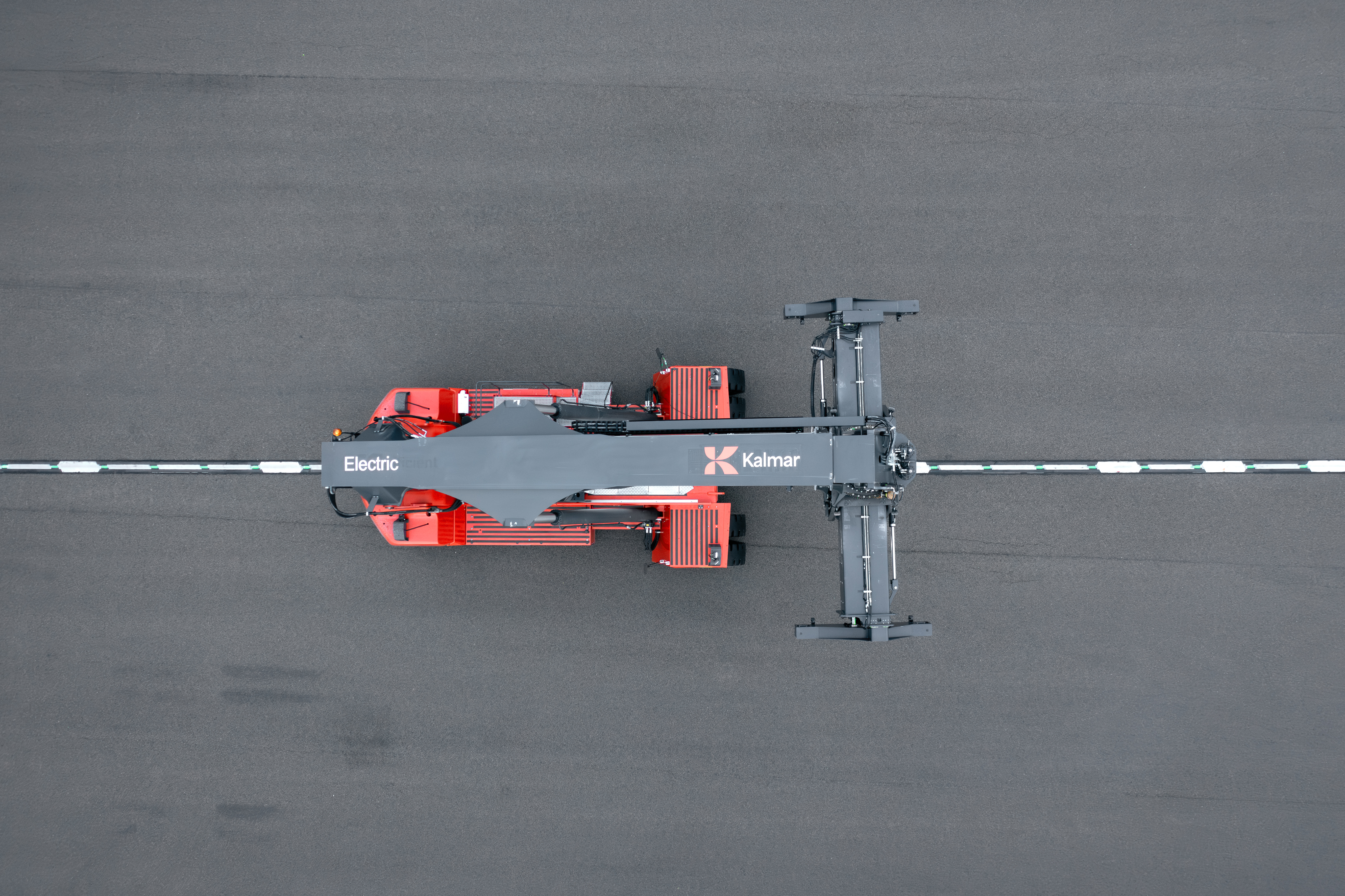
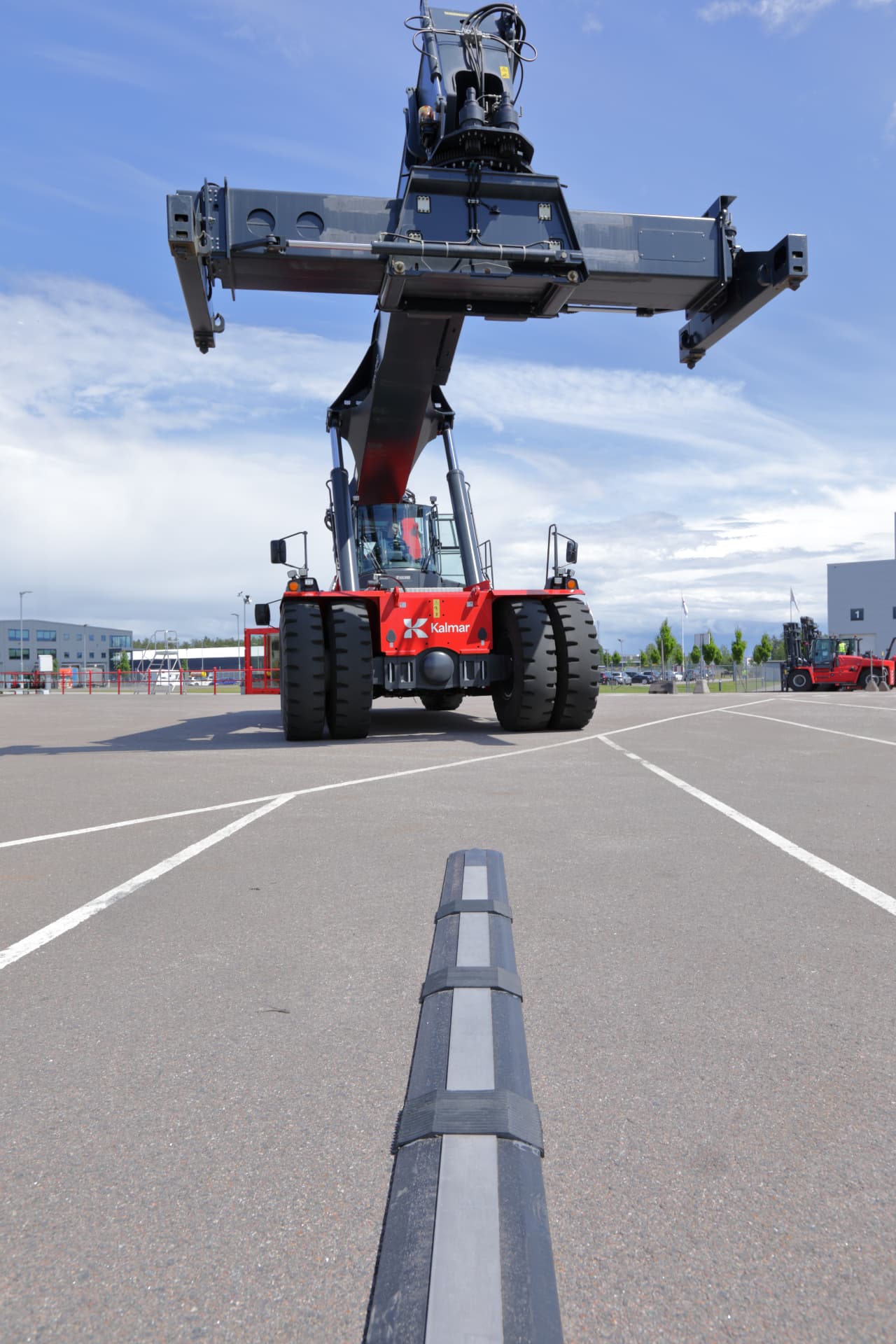
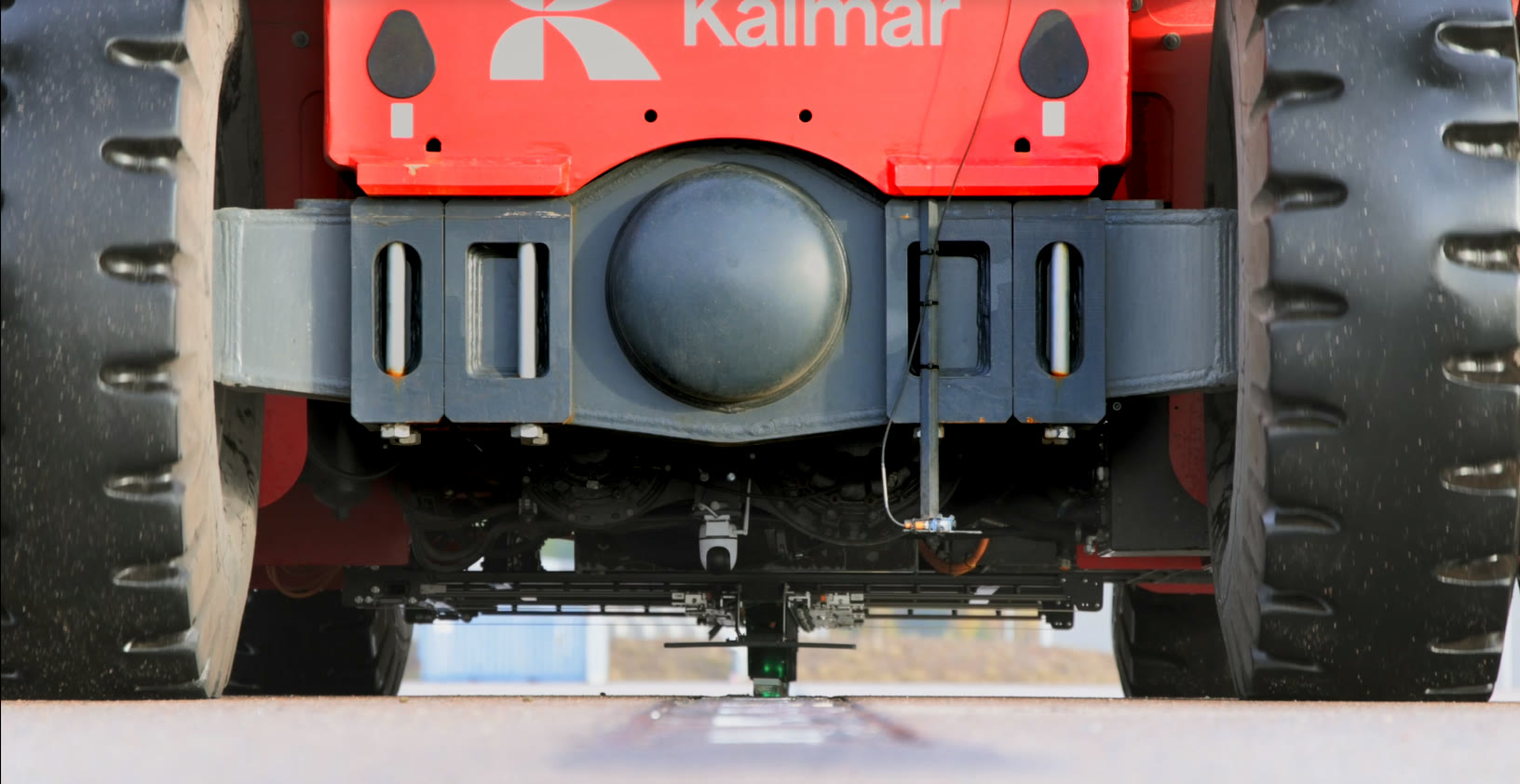
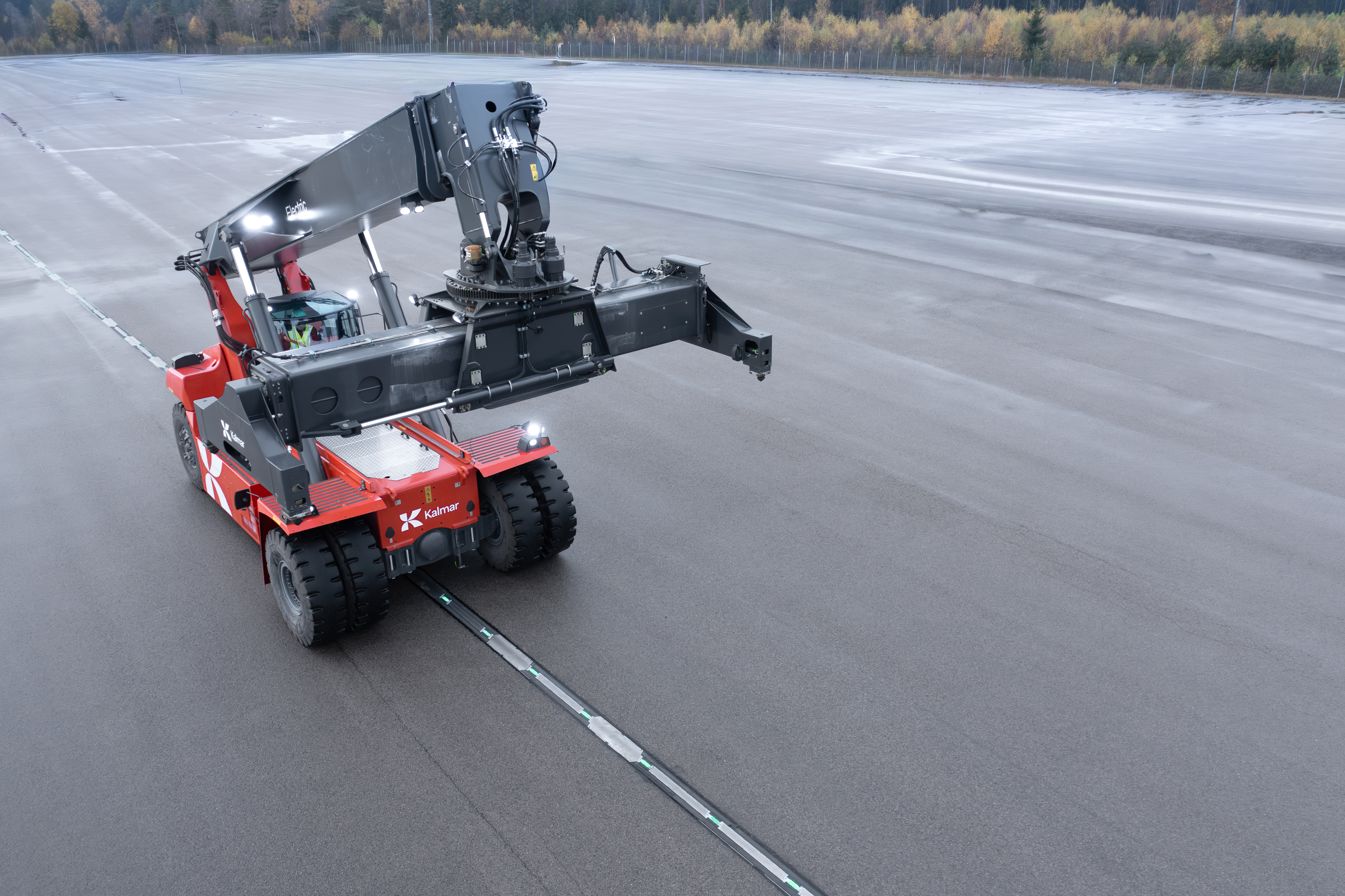
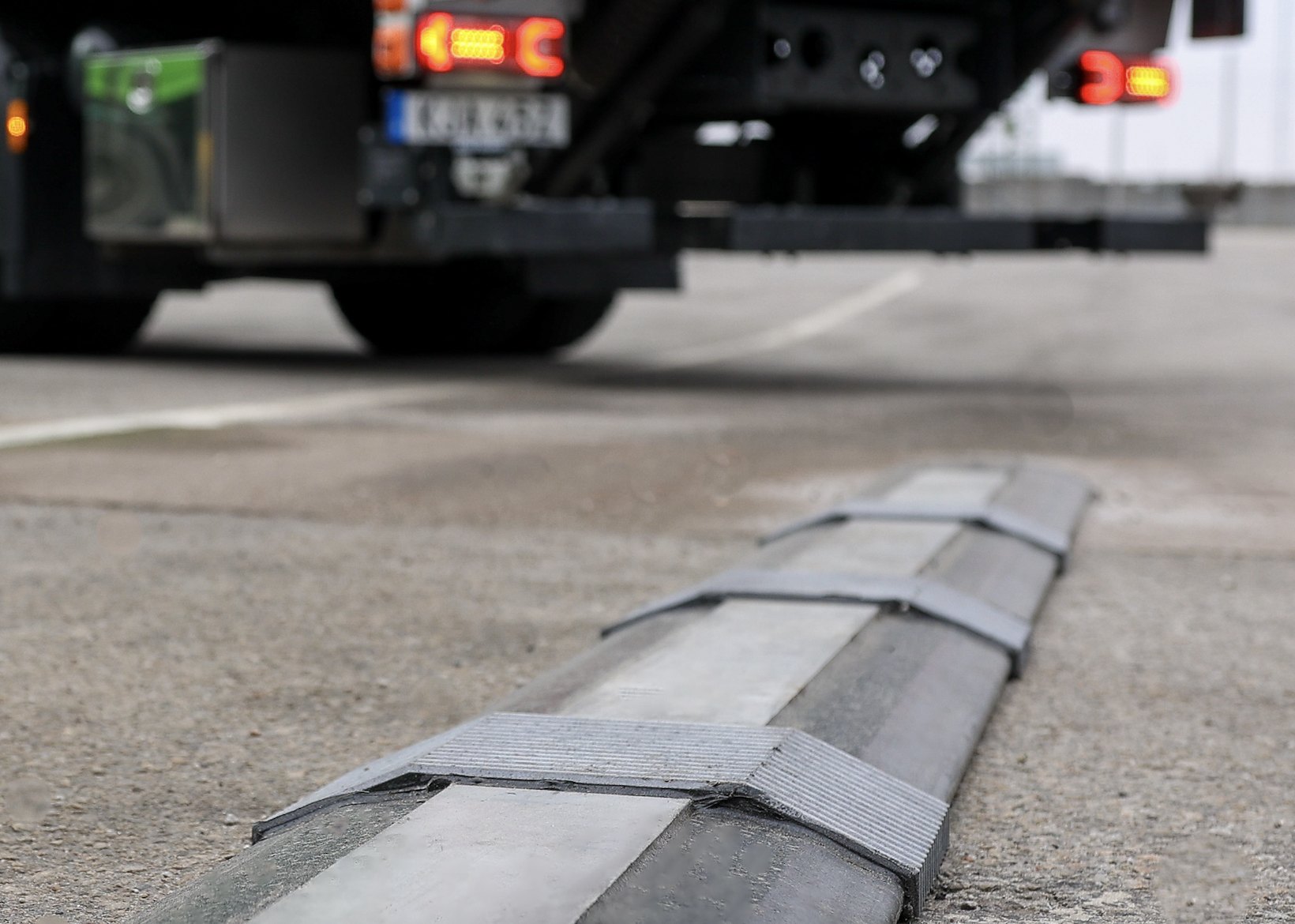
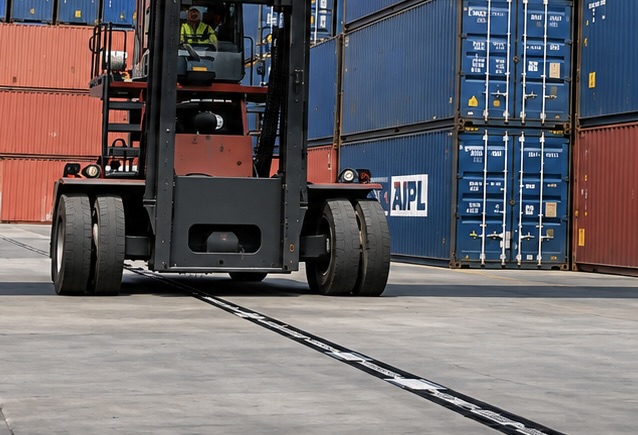
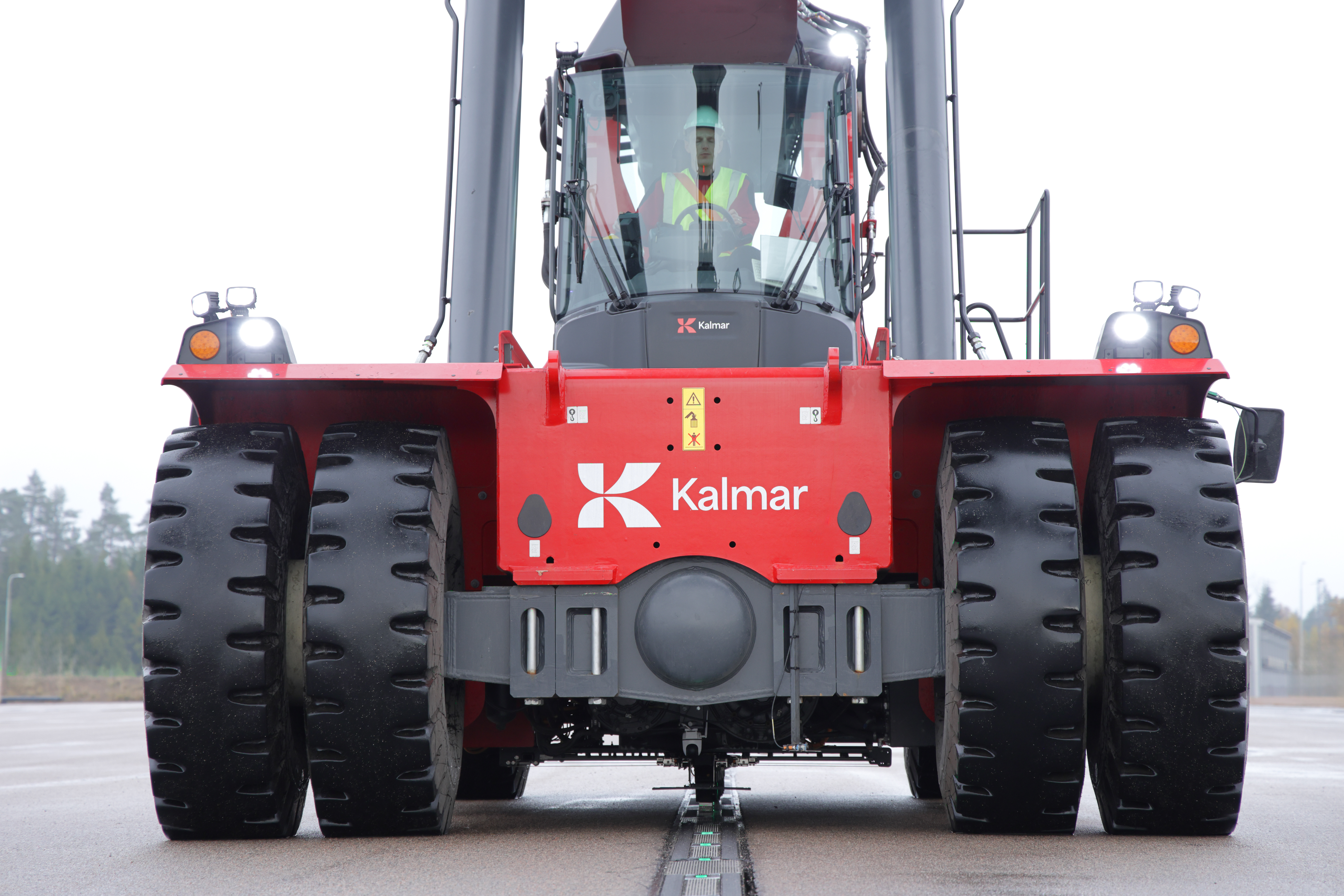
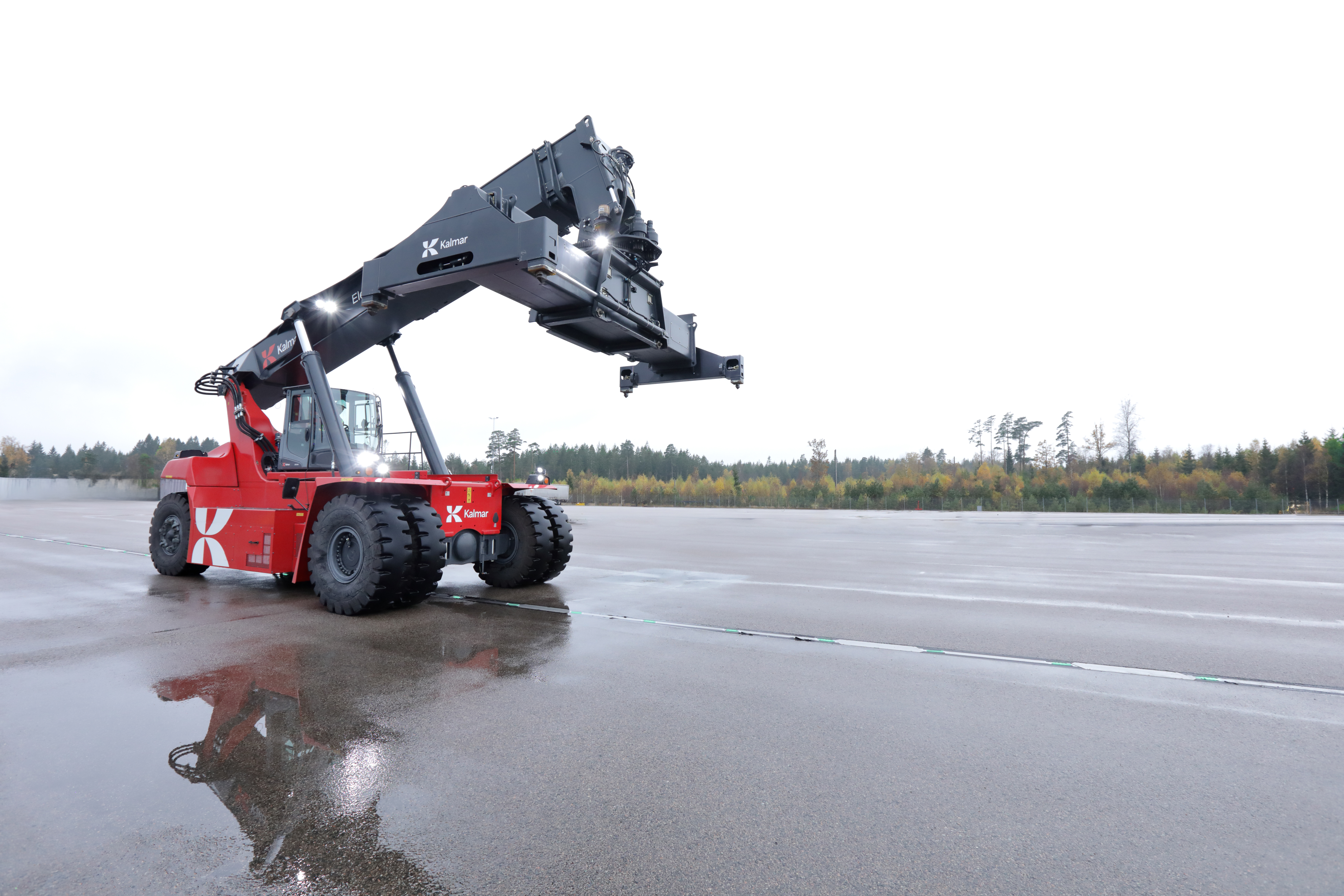
Kalmar and Elonroad have built a 200-metre electric road at Kalmar's Innovation Center in Ljungby, Sweden, where a reachstacker and a terminal tractor charge automatically from conductive rails in the ground while they drive. Charging becomes part of the operation instead of a stop in it, which means less downtime, fewer cables and smaller batteries.
Challenge
Kalmar, a global leader in container handling equipment, wants to help its customers go electric without compromising performance or cost efficiency. Ports expect electric equipment to match diesel in reliability, but electrification brings large batteries, charging downtime and grid limitations, all of which add to the total cost of ownership.
The collaboration combines Elonroad's automatic charging technology with Kalmar's expertise in ports, terminals, distribution and industrial applications. Vehicles charge both in motion and stationary, which could completely change the way heavy vehicles are run: smaller batteries, lower demands on grid capacity and better uptime.
Solution
In the first phase, Kalmar and Elonroad installed a 200-metre electric road at the Innovation Center and retrofitted a Kalmar reachstacker with Elonroad's energy collector, followed by a Kalmar terminal tractor. The system has been operational since Q3 2024, with a charging capacity of up to 300 kW. The track was used to test charging efficiency and uptime on a full-scale installation.
At Kalmar, we have always been the forerunner in EV technologies and innovative solutions to provide value for our customers, which is why this collaboration is so interesting. Together with Elonroad, we can be the first on the market to demonstrate a charging solution of “unlimited” on board energy.Tommi Pettersson, Executive Vice President of Strategy, Sustainability and Technology, Kalmar
The outcome
The project shows that heavy port equipment can charge from a conductive electric road during normal operation, without the driver doing anything. Two very different machines run on the same infrastructure, which means one rail can serve a mixed fleet from reachstackers to terminal tractors.
With a future-ready charging infrastructure, Kalmar strengthens its position as an OEM of choice for ports transitioning to high-performance, zero-emission operations, and Elonroad demonstrates that its rails work across multiple heavy-duty vehicle types in daily terminal use.